All

beyondrealitydevelopercontest

Niantic’s Beyond Reality Developer Contest

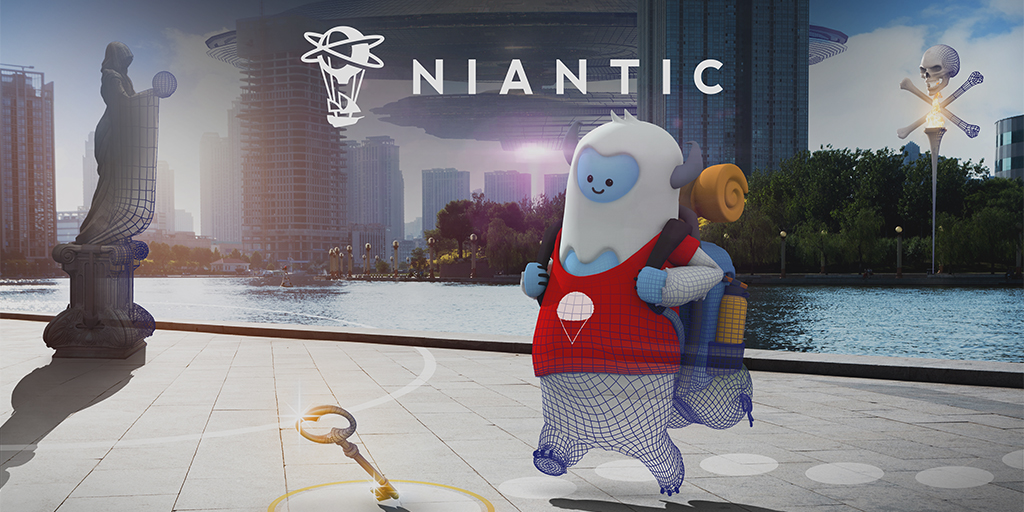
Last week, I had to take a week off to attend the final demonstration event for Niantic’s Beyond Reality Developer Contest. It’s a 4-month hackathon where participants create an augmented reality game that encourages exploration, exercise, and real-world social interaction by using Niantic’s Real World Platform SDK. Niantic’s Real World Platform includes a world-scale persistent

Niantic’s Beyond Reality Developer Contest Read More »

Tutorials for installing Ubuntu 18.04 dual system and NVIDIA DRIVER-CUDA-Pytorch GPU toolchain.

Last week I helped Zhenyi install the Ubuntu 18.04 dual system, and install NVIDIA driver, CUDA-10.0, CUDNN, Pytorch-gpu. Although there are many tutorials on the Internet, only very few works. So I think it is better to make a record. BIOS setting Shutdown and reboot. And enter the BIOS interface. Disable the Secure Boot. If

Tutorials for installing Ubuntu 18.04 dual system and NVIDIA DRIVER-CUDA-Pytorch GPU toolchain. Read More »

Vrsocial

Virtual Reality as a Physical Shared Space Social Platform

Social presence, intimacy, & user agency is still an occurring issue in virtual reality experiences that involve social interactions. While remote virtual reality social media has been reiterated numerous times (i.e. AltspaceVR, VRChat, Rec Room), I think a physical shared space virtual reality social platform would be interesting to see in the future, especially with

Virtual Reality as a Physical Shared Space Social Platform Read More »

DeepinScreenshot_select-area_20191010114941

Implement a paper of 3D reconstruction.

Kristofer and I found a paper Learning Implicit Fields for Generative Shape Modeling [https://arxiv.org/pdf/1812.02822.pdf], which is about using the implicit function to do 3D reconstruction. They use a DenseNet-like structure. Unlike DeepSDF, they use a binary output. Given a latent vector and a 3D coordinate, the network will output 0/1 which expresses outside/inside. Its structure

Implement a paper of 3D reconstruction. Read More »

Virtual Obstacles in Gait Balance Assessment

Our balance assessment research is currently at the point of transforming from a stationary standing paradigm into the dynamic walking paradigm. In the standing paradigm, we explored the assessment of anxiety-caused imbalance through various intensity levels of sound and visual flow. However, the dynamic and stationary paradigms are so different that we cannot use the

Virtual Obstacles in Gait Balance Assessment Read More »